Executive summary
“Figuring asphalt,” in construction parlance, means calculating the volume, weight, and cost of asphalt for a project. But the intent behind that calculation shifts dramatically depending on who is doing the figuring.
A homeowner wants a sanity check before hiring a contractor. A paving crew needs precise tonnage to protect bid margins. A civil engineer designs for decades of traffic loading. A facility manager models 25-year lifecycle costs. This guide covers all four perspectives—grounded in 2025–2026 material prices and industry-standard methodologies—so you can figure asphalt with confidence, regardless of where you sit in the project lifecycle.
1) The fundamentals: how to figure asphalt quantities
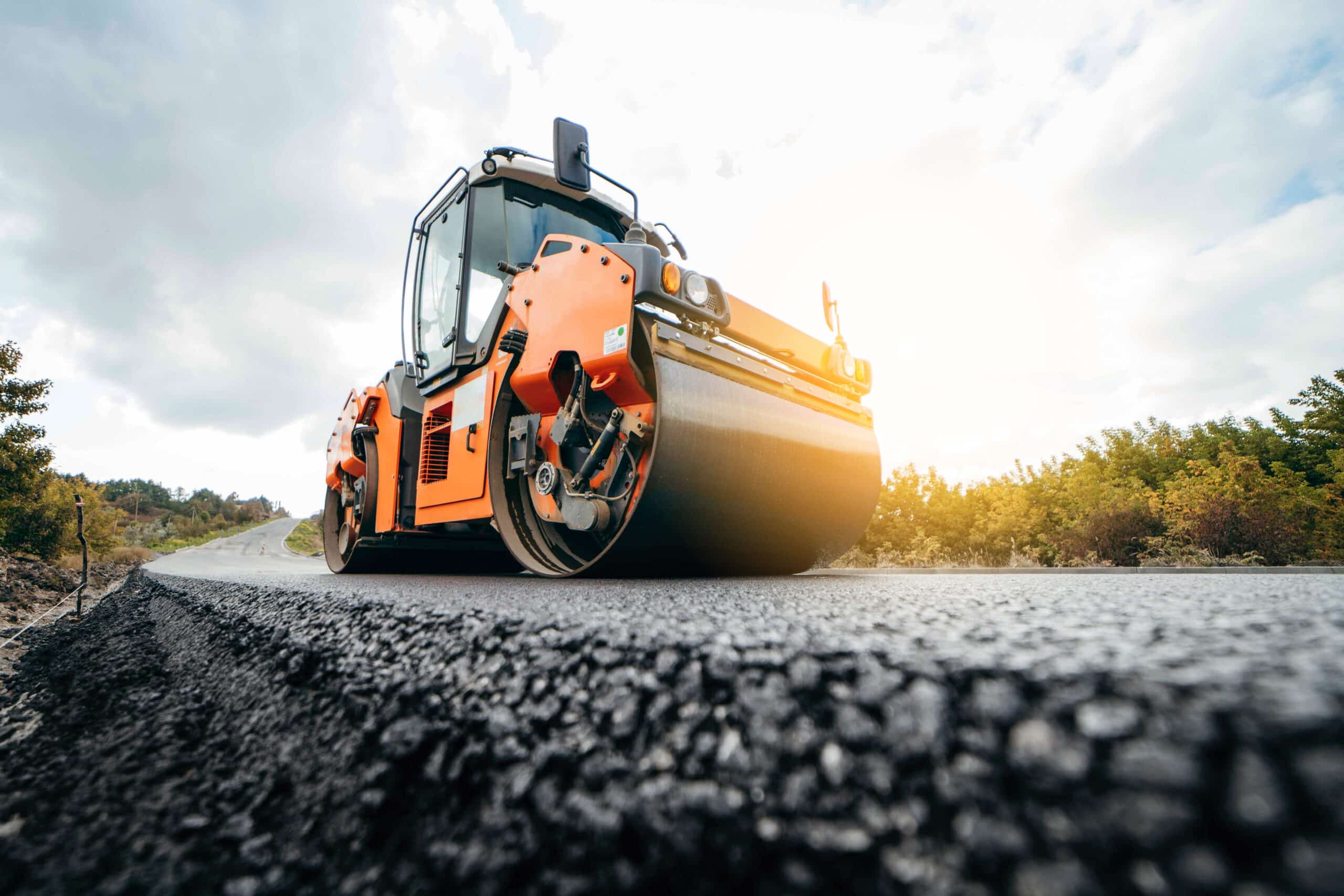 Heavy machinery such as this vibratory roller is essential for achieving the required compaction density calculated during the figuring process.
Asphalt is applied by volume (area × depth) but sold by weight (US tons). Figuring asphalt correctly requires bridging those two units with a density factor.
The four core variables
| Variable | Notes |
|---|---|
| Length | Total linear distance of the paving area |
| Width | Total distance across the paving area |
| Depth (compacted) | Thickness after roller compaction—not loose depth |
| Density | Compacted Hot Mix Asphalt (HMA) ≈ 145–150 lbs/cubic ft |
Step-by-step calculation
- Area →
Length (ft) × Width (ft) = Area (sq ft) - Volume →
Area (sq ft) × [Depth (in) ÷ 12] = Volume (cu ft) - Weight →
Volume (cu ft) × 145 lbs = Total lbs - Tonnage →
Total lbs ÷ 2,000 = Tons
Quick field shortcut
For rapid estimates on the job site, two rules of thumb are widely used:
- Per-square-yard rule: 1 inch of compacted asphalt ≈ 110–115 lbs/sq yd
- Multiplier formula:
Square footage × Depth (in) × 0.0061 = Estimated tons
Free online asphalt calculators automate this math for standard rectangular areas, but understanding the underlying formula is essential for irregular shapes and contractor verification.
2) Figuring asphalt as a homeowner
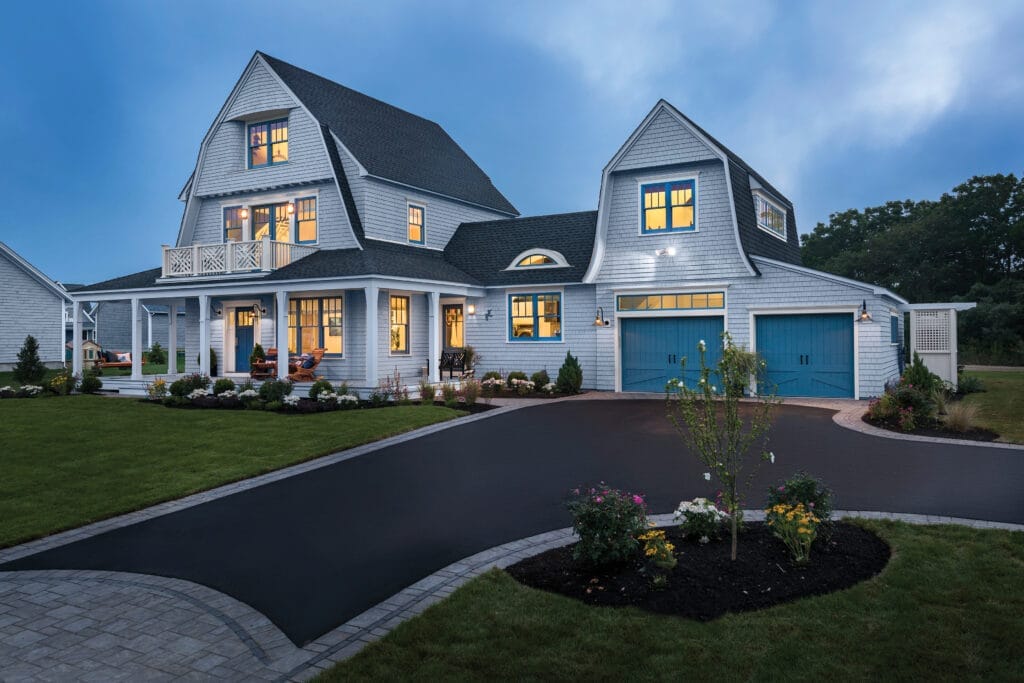 Homeowners calculate costs based on total square footage rather than raw material tonnage.
For most homeowners, figuring asphalt means answering one question: “Is this contractor’s quote reasonable?” Residential projects hinge on square footage and all-in installed cost rather than raw tonnage.
Recommended thickness by use case
- Standard passenger vehicles: 2.5–3 inches compacted, over a prepared aggregate base
- RVs, delivery trucks, or heavy loads: 4 inches or more
2025 residential cost benchmarks
| Cost component | Range (per sq ft) | What it covers |
|---|---|---|
| Material only | $1.50–$3.00 | Raw Hot Mix Asphalt |
| Labor & equipment | $2.00–$6.00 | Grading, paving, compaction, machinery |
| Base preparation | $1.00–$3.00 | Excavation and crushed-stone sub-base |
| Total installed | $4.00–$8.00 | Standard residential driveway |
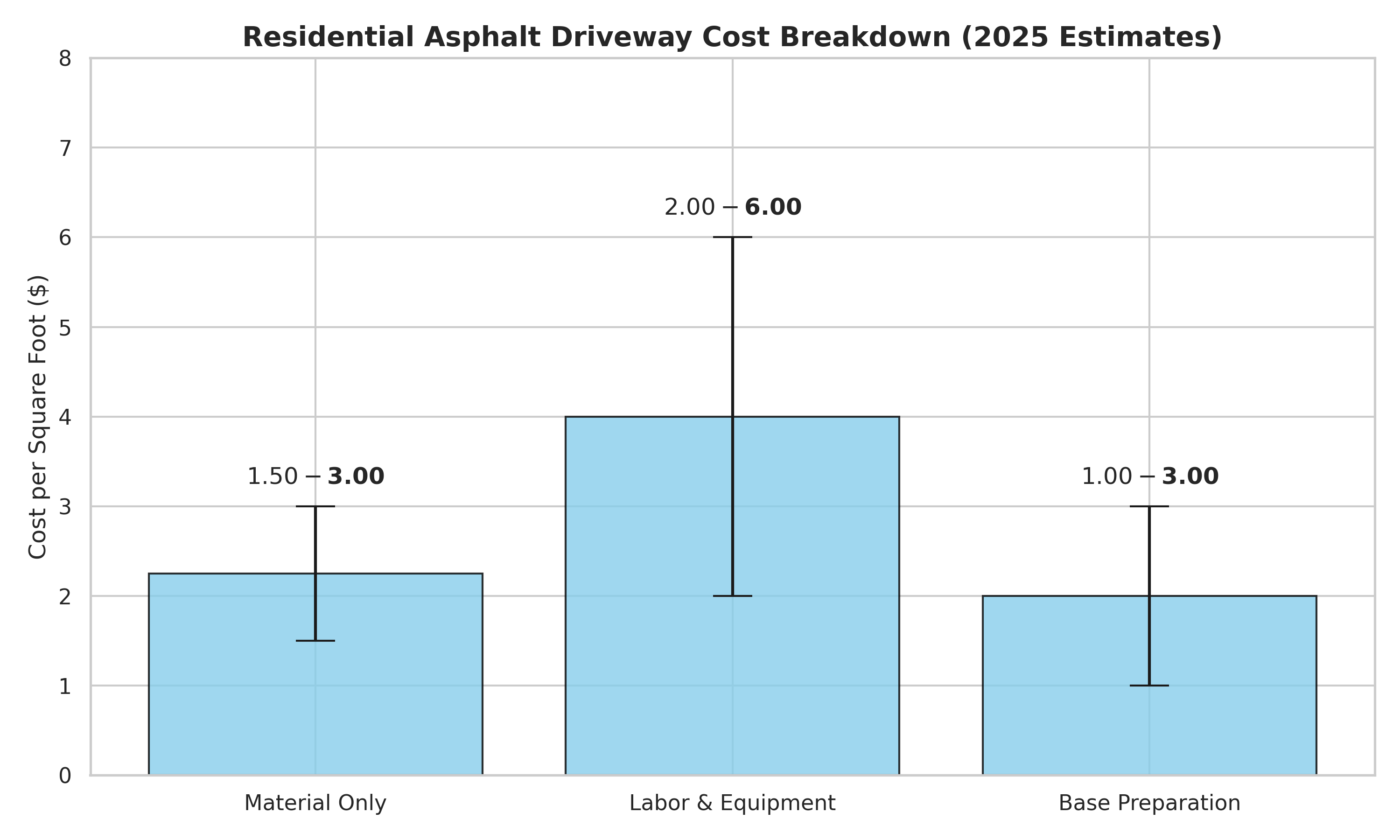 Breakdown of estimated costs per square foot for a residential driveway installation in 2025.
Costs can reach $10–$15/sq ft when extensive excavation, tree root removal, or complex drainage work is required.
What to check in a contractor’s bid
- Does the quote specify the compacted depth (not loose depth)?
- Is the asphalt mix grade listed?
- Is base preparation itemized separately?
- Does the price reflect current regional HMA pricing—not last year’s?
3) Figuring asphalt as a paving contractor
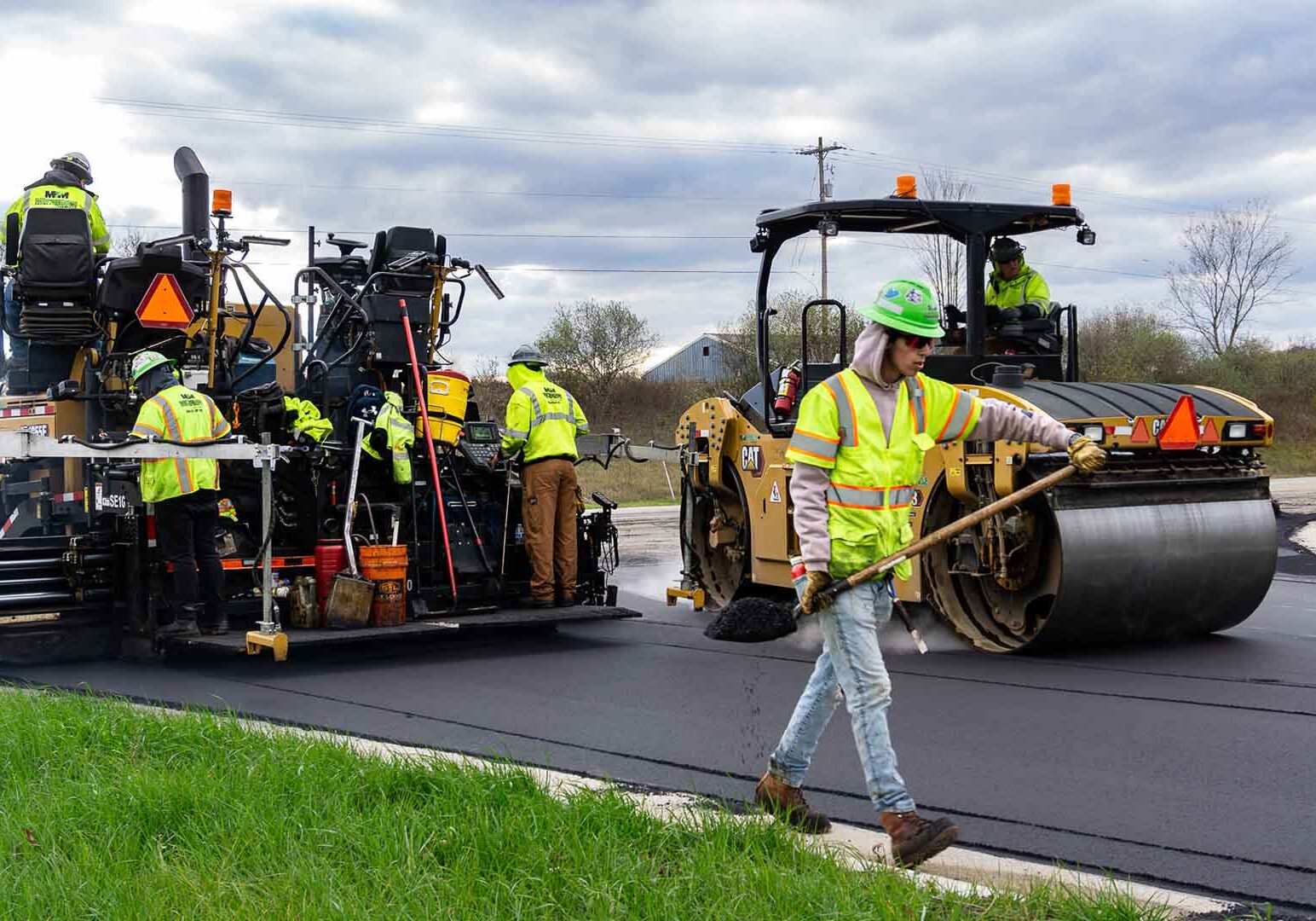 Contractors must figure precise material needs to keep crews moving efficiently and bids competitive.
For paving contractors, figuring asphalt is the mathematical backbone of competitive bidding. An underestimate leaves the crew short on site; an overestimate loses the job. Neither is acceptable.
The bidding workflow
- Site visit — evaluate existing pavement condition, subgrade stability, and drainage
- Digital takeoff — use estimating software (HCSS HeavyBid, STACK, or similar) to calculate precise square footage from blueprints or satellite imagery
- Tonnage calculation — apply the standard formula, then add contingency
- Price build-up — material + plant delivery + labor + equipment + overhead + margin
Contingency factors when figuring asphalt tonnage
Contractors add a 5–10% buffer to account for:
- Yield loss — base irregularities requiring extra material to achieve a level surface
- Hopper waste — material remaining in the paver at the end of a run
- Temperature rejection — loads arriving below spec temperature are refused
- Compaction variation — achieving higher density on commercial lots consumes more raw tons per cubic foot
2025 HMA plant pricing
Hot Mix Asphalt costs $100–$200/ton at the plant, depending on region and mix design. Liquid asphalt cement indices fluctuate with crude oil prices, making regular monitoring essential for accurate bids.
4) Figuring asphalt as a civil or pavement engineer
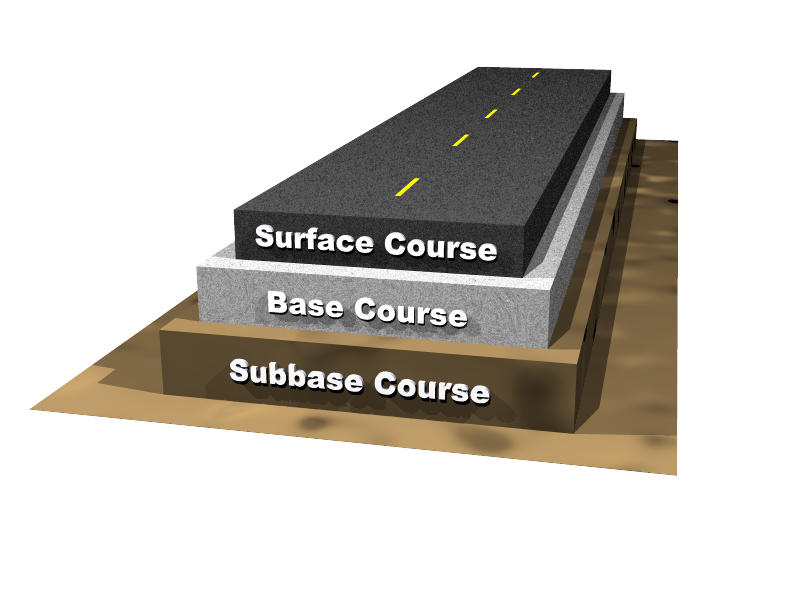 Engineers design asphalt pavements as multi-layer structural systems to distribute traffic load stresses over the design life.
Engineers approach figuring asphalt as a structural mechanics problem, not just a volume calculation. The goal is a pavement that carries projected traffic loads over a 20–40 year design life without premature failure.
Structural Number (SN) design
Rather than selecting a depth empirically, engineers use the AASHTO Guide for Design of Pavement Structures to determine a required Structural Number (SN). SN accounts for:
- Projected Equivalent Single Axle Loads (ESALs)
- Subgrade resilient modulus (soil strength)
- Reliability level (highway vs. local road)
- Layer coefficients for each material type
The SN drives the combined thickness of surface asphalt, binder course, and aggregate base—an engineered system, not a rule of thumb.
Mix design specifications
Engineers figure not just quantity but also composition of the asphalt itself:
| Mix type | Primary use |
|---|---|
| Hot Mix Asphalt (HMA) | Standard for high-traffic highways |
| Warm Mix Asphalt (WMA) | Lower temperatures, longer haul windows, reduced emissions |
| Polymer-Modified Asphalt (PMA) | High rut resistance in heat; crack resistance in cold |
| Open-Graded Friction Course (OGFC) | Porous surface to reduce hydroplaning on highways |
5) Figuring asphalt as a property or facility manager
Property managers treat asphalt as a capital asset. Figuring asphalt means modeling decades of maintenance, rehabilitation, and eventual replacement—not just the initial pour.
Life-Cycle Cost Analysis (LCCA)
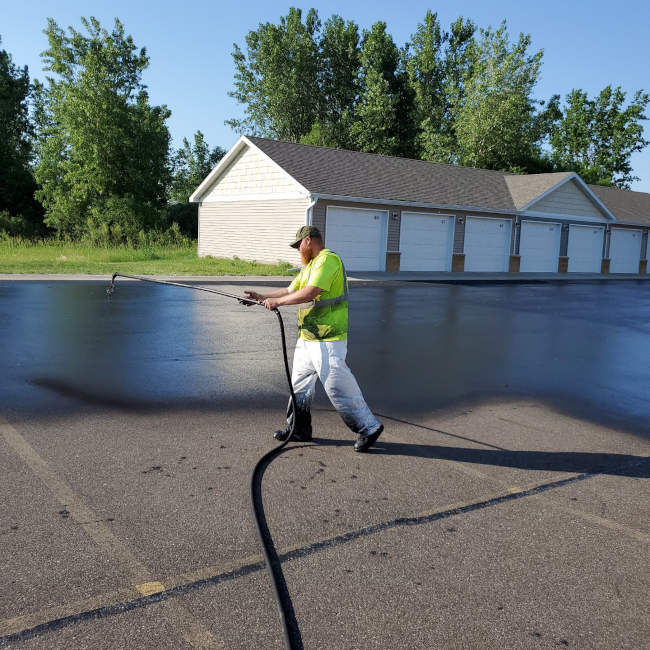 Routine maintenance such as sealcoating is factored into a facility manager’s lifecycle cost analysis to extend pavement life.
LCCA evaluates all costs over the full pavement lifespan, discounted to present value:
- Initial construction
- Routine maintenance (crack sealing, sealcoating)
- Periodic rehabilitation (mill and overlay)
- Terminal reconstruction
Proactive maintenance is dramatically cheaper than reactive repair. Figuring these costs into annual CapEx budgets can extend an asphalt asset’s life from 15 years to 25+ years.
Maintenance cost benchmarks
| Activity | Estimated cost | Optimal frequency | Purpose |
|---|---|---|---|
| Crack sealing | $1.00–$3.00/linear ft | Annually | Prevents water infiltration into sub-base |
| Sealcoating | $0.15–$0.25/sq ft | Every 3–5 years | Protects binder from UV oxidation and chemical spills |
| Mill and overlay | $2.00–$4.00/sq ft | Every 15–20 years | Replaces wearing course, extends structural life |
| Full reconstruction | $5.00–$10.00/sq ft | 25+ years | Complete replacement when base has failed |
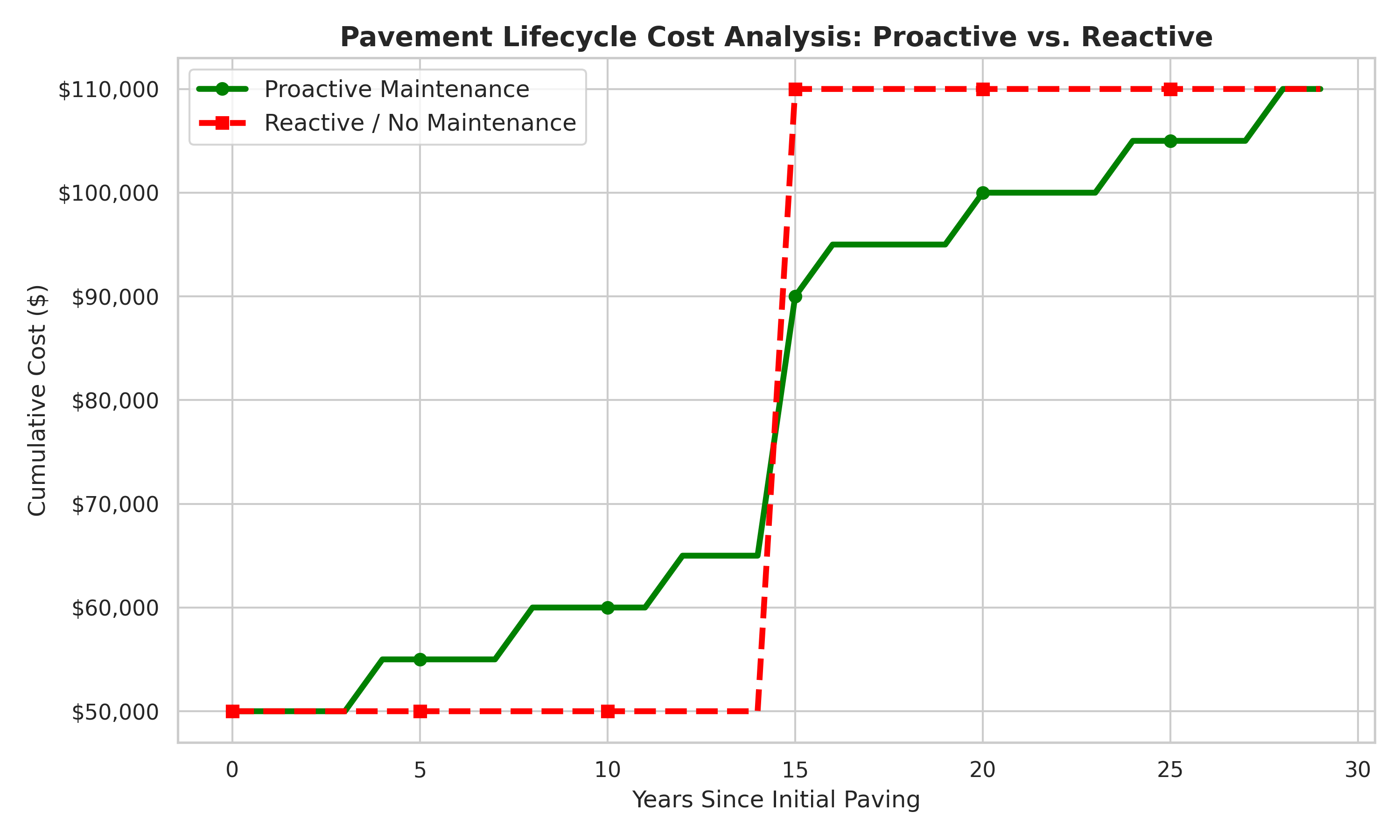 LCCA demonstrates the financial benefits of proactive maintenance versus reactive full replacement over a 30-year pavement lifespan.
Reclaimed Asphalt Pavement (RAP) and sustainability
Modern facility managers increasingly figure environmental impact alongside financial cost. Reclaimed Asphalt Pavement (RAP)—milling, crushing, and recycling old asphalt back into new mixes—delivers measurable benefits:
- Diverts millions of tons of material from landfills annually
- Reduces virgin aggregate and bitumen demand
- Can lower new-mix material costs by 20–30%
- Each ton of RAP offsets roughly 1 ton of virgin aggregate and ~20 kg of binder
Conclusion
Figuring asphalt is a multi-layered discipline. The same core formula—area × depth × density ÷ 2,000 = tons—underpins every calculation, but what you do with that number depends entirely on your role:
- Homeowners use it to budget and verify contractor quotes
- Paving contractors use it to build precise, competitive bids with proper contingency
- Civil engineers use it as one input in a structural design system engineered for decades of traffic
- Property managers use it as the foundation for lifecycle cost modeling and capital planning
Accurate figuring asphalt—whether for a 500 sq ft residential driveway or a 50,000 sq ft commercial parking lot—is what separates a project that performs from one that fails early and costs far more than it should.
References
- Procore. Asphalt Calculator
- Lone Star Paving. Calculating Asphalt Tonnage for Your Paving Project
- Asphalt Services Inc. Asphalt Calculator
- Red Stag Materials. How to Calculate How Many Tonnes of Asphalt Required
- Quora. How do you calculate the amount of asphalt needed for a driveway?
- Reddit. What is the formula you use to figure out how much asphalt you need?
- Gigacalculator. Asphalt Calculator — How much asphalt do you need?
- DC Paving & Sealcoating. Asphalt Driveway Thickness Guide
- Asphalt Calculators. 2025 Asphalt Cost Guide: Current Pricing & Trends
- RM Service Co. The Asphalt Bidding Process: What Contractors and Clients Need to Know
- HCSS. Asphalt Paving Estimating Software
- ST Wooten. Asphalt Monthly Pricing Update
- CE Calc. AASHTO Pavement Thickness Design Guide
- Street Works. Different Types of Asphalt Mixes and When To Use Them
- Federal Highway Administration (FHWA). Life-Cycle Cost Analysis in Pavement Design
- National Asphalt Pavement Association (NAPA). RAP Benefits for Pavement Owners