Affiliate disclosure and method: This article contains an Amazon affiliate link. We may earn a commission if you buy through it. This is a desk-based assessment of seller-listed specifications, not a hands-on or long-term durability test. Listing details can change; confirm the current label before selecting the product.
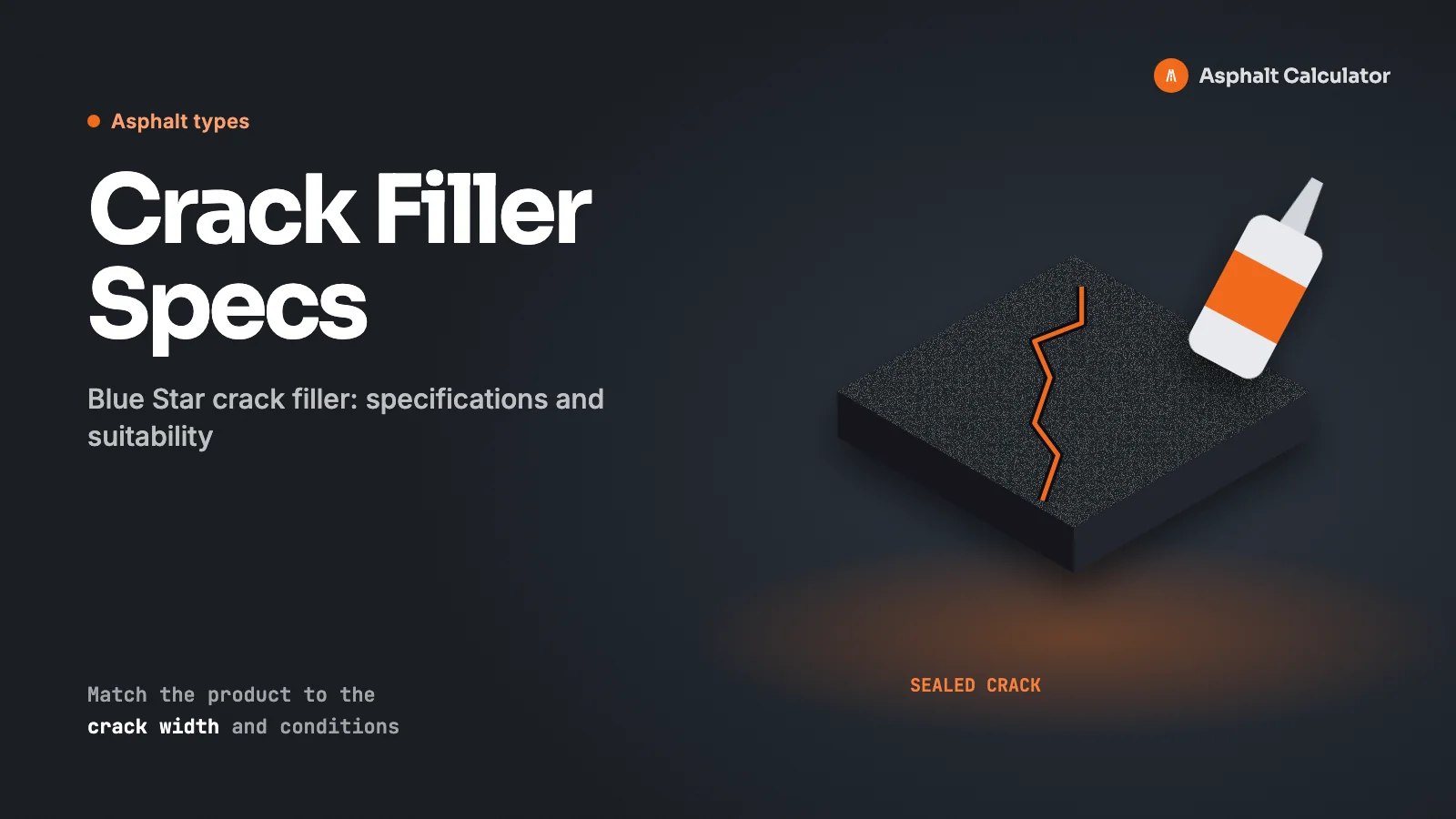
Blue Star Flexible Asphalt Crack Filler is sold for small asphalt crack repairs. The useful buying question is whether the exact bottle’s application limits match your prepared crack dimensions, weather, and traffic-opening needs.
What the listing claims—and what that does not prove
| Seller-listed attribute | What to verify on the current product |
|---|---|
| 16 US fl oz bottle | Net contents and labeled coverage for your crack geometry |
| Asphalt driveway and parking-lot use | Compatible substrates and any surface preparation requirements |
| Maximum crack width of 1 inch | Permitted depth, lift limits, and any backer material requirements |
| Flexible in hot and cold weather | Application temperature versus cured-service conditions |
| Bottle application | Cleaning, mixing, drying, and finishing instructions |
These are listing claims, not independently measured performance. We have not tested adhesion, movement capacity, coverage losses, freeze-thaw behavior, or reopening after a season of traffic. The page does not establish that this product outperforms another filler.
Check the current Blue Star listing on Amazon
Measure the crack before choosing a bottle
Width alone is not enough to estimate the amount of filler. Measure the prepared length, width, and fill depth, following the product’s rules for deeper cracks or backer material.
Geometry example, not a coverage test: a uniform crack 20 ft long, 1/4 inch wide, and 1/4 inch deep has a volume of:
Length = 20 × 12 = 240 inches
Volume = 240 × 0.25 × 0.25 = 15 cubic inches
US fluid ounces = 15 × 128 ÷ 231 ≈ 8.31 fl oz
A nominal 16 US fl oz bottle contains 28.875 cubic inches. The geometric example uses about 52% of that volume before irregularities, handling losses, or product-specific requirements. It is not a promise of coverage: cracks are rarely uniform and the label’s coverage and depth limits control the order.
Use the crack filler calculator to compare measured crack sections. Do not confuse US fluid ounces, a volume unit, with ounces of weight.
When to investigate a different repair
A bottle-applied filler does not restore failed pavement support. Inspect widespread interconnected cracking, settlement, crumbling edges, and recurring water entry before treating the visible crack alone. The repair-or-reconstruction guide helps organize those observations.
A crack wider or deeper than the product allows needs a different product or repair method. For a large network of otherwise suitable cracks, compare total required volume, package size, and application method rather than bottle price alone.
Questions the listing summary cannot answer
Before applying, obtain the current label or manufacturer instructions and establish:
- The permitted crack width and depth, including lift or backer requirements.
- Whether the surface must be dry and how long rain must be excluded.
- Application temperature, mixing instructions, and cleaning requirements.
- Traffic-opening time under the actual conditions.
- Whether repeat applications or later sealcoating are compatible.
If those details are missing or inconsistent, ask the seller or manufacturer before use. A claim about remaining flexible in changing weather does not mean the material can be installed in any weather.
How to compare an alternative fairly
Compare the same prepared crack dimensions and surface condition. Record compatible materials, usable volume, permitted depth, cure conditions, cleanup, and the manufacturer’s coverage basis. A lower price per bottle may still mean a higher project cost if the bottle is smaller or multiple applications are required.
There is no field-tested recommendation or durability ranking on this page. Blue Star is a candidate only when its current documented conditions match the repair. Keep the product label, purchase details, and dated observations if you want to evaluate the repair over time.
Source and further reading
The affiliate listing above is the source of the seller claims summarized here. The volume example is arithmetic using 231 cubic inches per US gallon and 128 US fluid ounces per gallon, not a manufacturer test. For broader repair planning, see the DIY pavement rehabilitation guide.